01
8 → 5 steps
The shipped flow kept every required action inside one continuous setup sequence.
SHIPPED WORKFLOWFINTECH · PRODUCT IMPROVEMENT · 16-DAY DELIVERY
I turned one prioritized usability issue into a focused research, redesign, and validation cycle for a live private-credit platform.
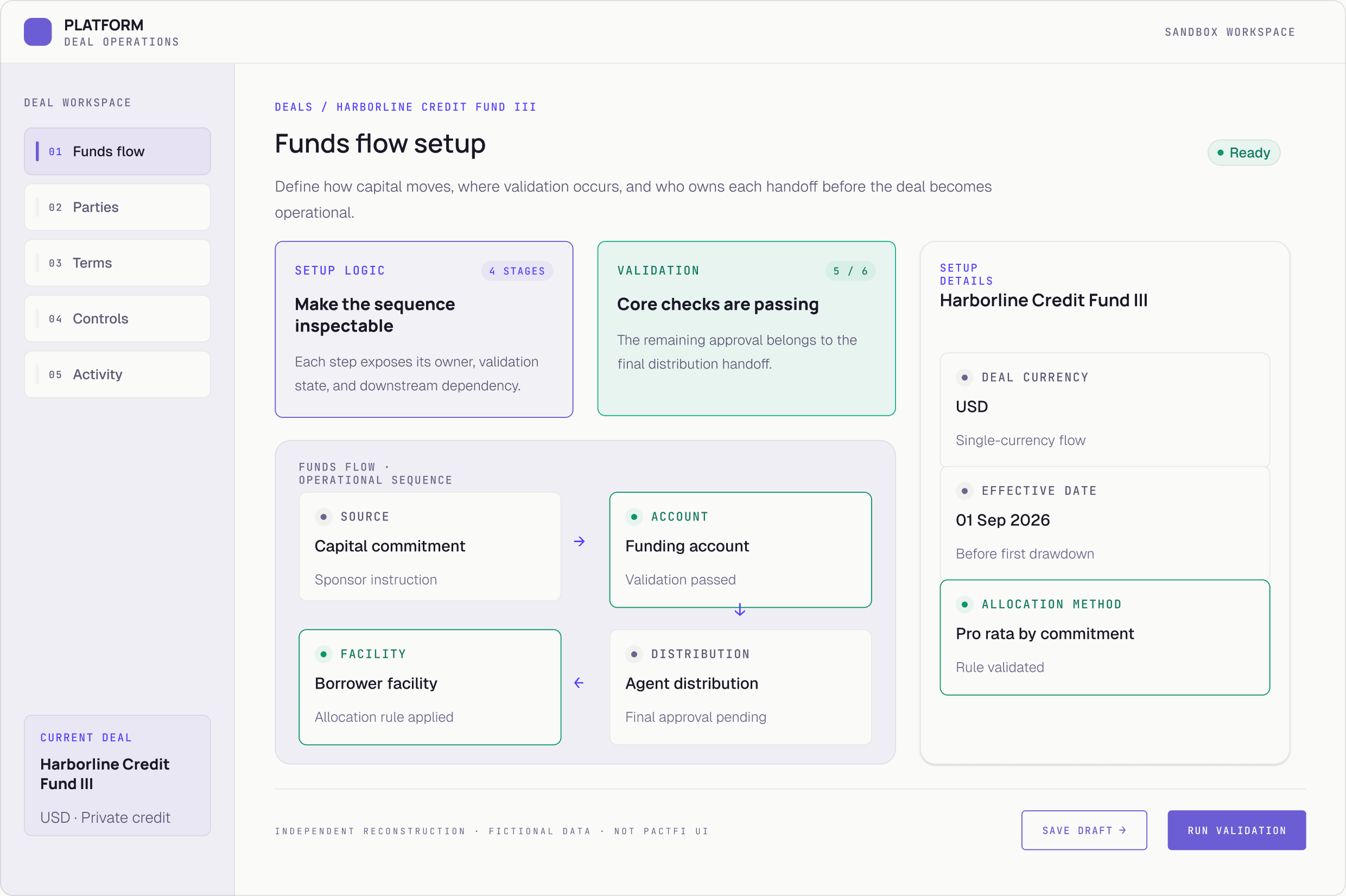
Reconstructed interface shown for public-safe storytelling. Product names and visual details are adapted.
// AT A GLANCE
I owned the Cash Flow Setup investigation and carried it from problem framing through redesign, validation, and delivery alignment.
The shipped flow kept every required action inside one continuous setup sequence.
SHIPPED WORKFLOWA focused cycle from issue framing and behavioral review through validation and delivery alignment.
END-TO-END OWNERSHIPIndividually moderated with partners from PM, Business Development, and Customer Support.
INTERNAL DOMAIN EXPERTS// FROM INTAKE TO FOCUS
As client adoption, workflows, and operational complexity grew, BD and Customer Support consolidated eight important issues using client feedback and information from the support tool. I helped the six-person design team turn that intake into a coordinated research cycle without stopping active delivery.
Eight separate client-reported issues across the product, not eight reports of one problem.
INPUTI helped prioritize six investigations, with one designer responsible for each selected issue.
SCOPEI created the common research framework and owned Cash Flow Setup through the shipped redesign.
DELIVERY// INVESTIGATE → REDESIGN
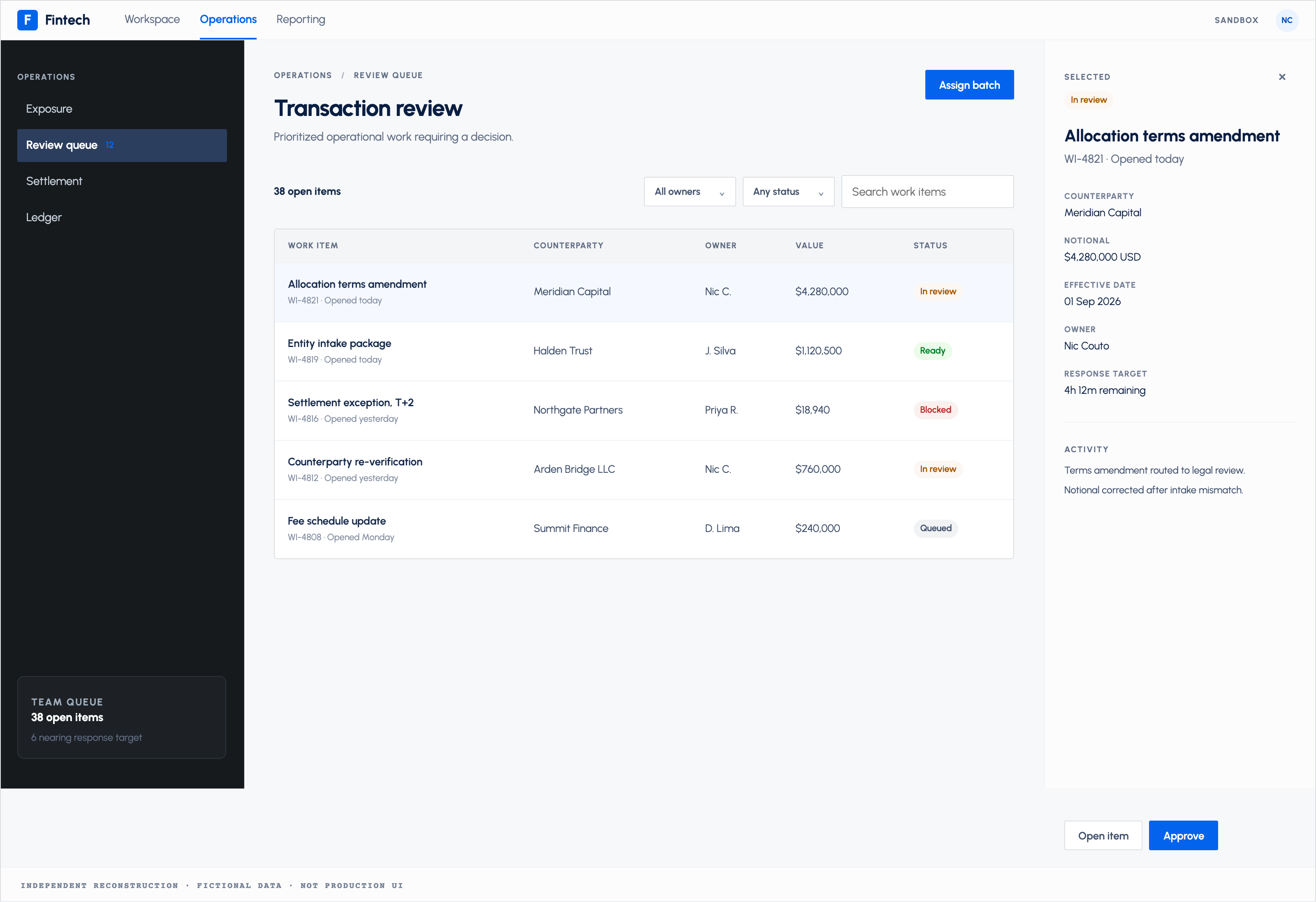
I used Ask Galileo’s natural-language chat to generate focused charts, funnels, path analyses, and session playlists. I reviewed the resulting sessions directly, mapped the complete task, and redesigned the flow around continuity rather than isolated screens.
// SHIPPED AND VALIDATED
The shipped redesign reduced Cash Flow Setup from eight steps to five. Supporting entity work stayed inside the active Deal, existing entity information could be reused, and every required action remained in one continuous flow.
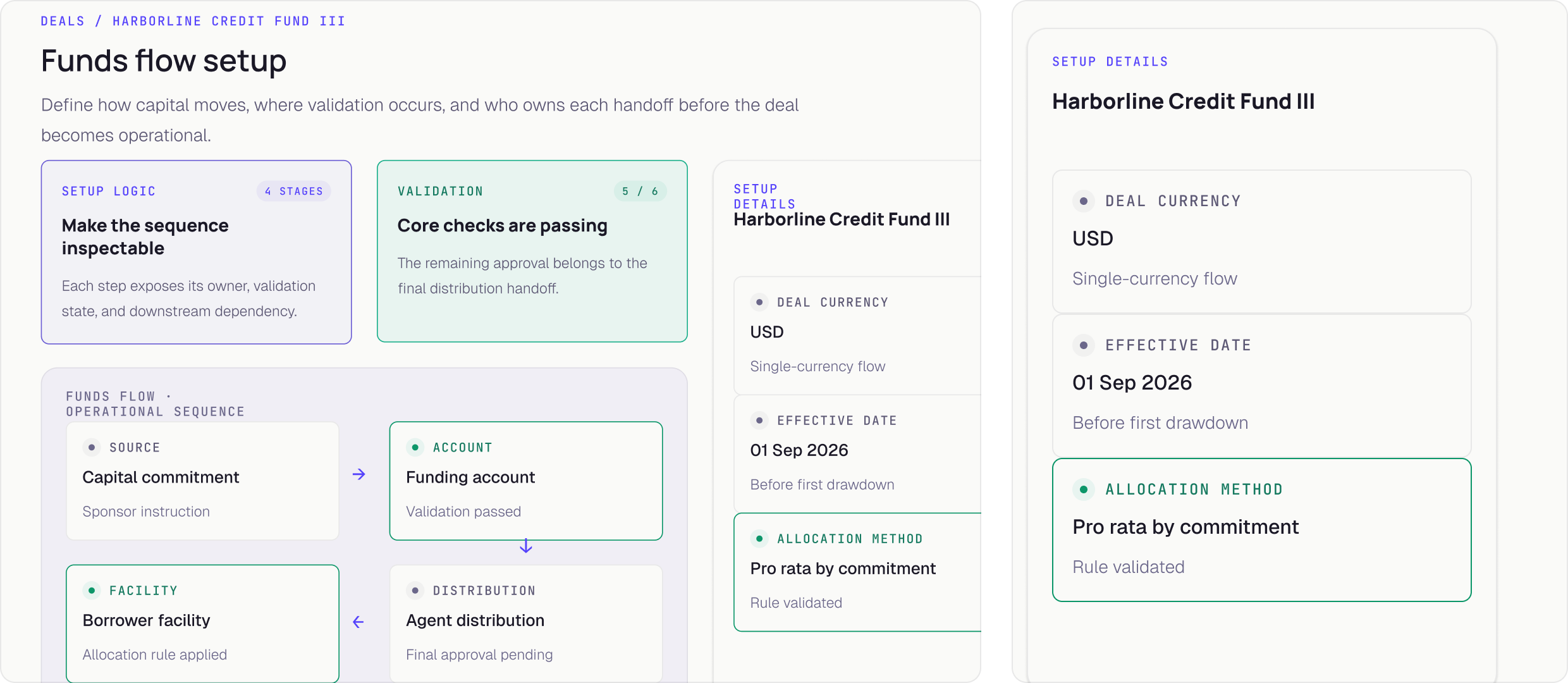
Reconstructed details · five individual internal sessions · directional outcomes only · no externally verifiable baseline.
I moderated five separate sessions with partners from PM, Business Development, and Customer Support, each completing the full task individually.
INTERNAL DOMAIN EXPERTSI tested the complete sequence as one workflow, not a collection of screens, so continuity and return paths stayed visible.
END-TO-END TASKPost-release monitoring suggested smoother task completion, fewer support questions, and fewer errors or dead clicks. The short measurement window made these directional signals, not proof of causality.
DIRECTIONAL · NO CONTROLLED BASELINE// REFLECTION
With more time and direct customer access, I would make the same loop more proactive, continuous, and closer to end users.
Track completion, friction, errors, and performance as ongoing product-health signals.
MeasureMaintain a standing participant panel or design-partner program.
AccessPair designers’ end-to-end delivery with dedicated research support.
CapacityUse A/B testing selectively, only when it is the right method for the question.
ExperimentLet AI flag anomalies, with people reviewing context and deciding what matters.
Triage